Hot Syrahs from Cool-Climate California Vineyards
Written by Kate Soto
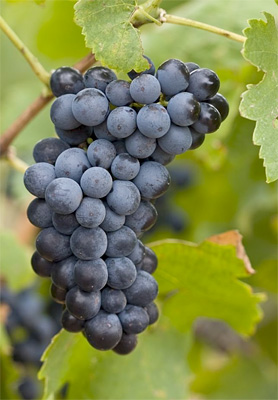 |
Syrah is one of the most evocative grapes in contemporary winemaking, known for its distinctive split personality. Deeply affected by growing conditions, the Syrah in your glass will vary wildly depending on where it is grown. In cool climes, a meaty, smoky, black-peppery muscularity shines through, with layers of olives, herbs, and minerals. When grown in warmer regions, however, it becomes ripe and fruit-centric, with sweet blueberries, blackberries, and pepper at the forefront of its profile. A native of Northern Rhone, it’s the world’s seventh most planted grape. At one point, it was poised to take over California, yet today it only accounts for 3 percent of the state’s grape crush. After a few misstarts (some attribute the Sideways-launched Pinot craze as the theft of its thunder), it may finally be in position to discover its true West Coast potential. |
California has had Syrah plantings since the 1880s, but it wasn’t until the 1990s that it began to have any kind of significant foothold in the state. Mostly thanks to the Rhone Rangers, an ad-hoc group of California producers smitten with Rhone varietals, plantings increased from 200 acres in the 90s to 17,0000 by 2004. Key figures were Randall Graham of Bonny Doon, Joseph Phelps (who released the first commercial California Syrah in 1974), John McCready, Bill Crawford, Fred Cline, Steve Edmunds, and Bob Lindquist. Another influential factor was a partnership between Chateau de Beaucastel in Chateauneuf-du-Pape and the American importer Robert Haas, who created a Rhone-centric winery in Paso Robles called Tablas Creek Vineyard. They imported clones of the 13 CdP varietals and made them available to other growers.
Given its mutability, and the state’s varied microclimates, the landscape of California Syrah being currently produced is curious and eclectic--and can be hard to navigate. In cooler regions such as Santa Barbara, which benefits from east-west orientation and Pacific breezes, the best wines can be akin to their savory Cote-Rotie or Hermitage counterparts. In sunny Napa, Syrah can find more in common with fruity Barossa Valley Shiraz. To add a wrinkle to the complexity, Syrah is a grape that relies heavily on key winemaker decisions for its final expression, namely: How ripe (how early to harvest)? How oaky? But if you want exciting wine, you’ve got to begin with exciting fruit, and right now in California, cool-climate vineyards are decidedly where it’s at.
Melville Vineyards and Winery in the cool Sta. Rita Hills, Santa Barbara, has chosen the route of the less oaky, and achieved this by aging its 2011 Syrah, Verna’s Vineyard in neutral 10-year-old French oak until it was bottled in August 2012. Ron Melville and sons, with winemaker Greg Brewer, sourced the grapes from their estate vineyard in Cat Canyon, which is predominantly Lompoc dune sand with clay loam and Monterey shale dispersed throughout. They fermented 40 percent of the fruit in whole clusters, with a total of 30 days skin and stem contact. The juice rests on its lees without sulfur until racked in May and bottled in April. All of these efforts preserve an intriguing rusticity to the wine. It maintains a medium weight that belies its 14 percent abv. Deep magenta in the glass, it gives off a lively blend of sweet and savory notes: spice, charcoal, black currant, sausage, and cocoa. The palate is smooth with notes of cranberry and balsamic. The acid--and thus the wine--retains its vitality throughout.
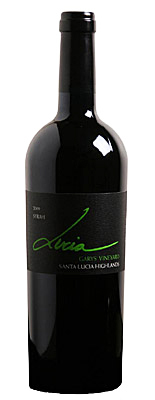 |
Moving north along the coast to the western edge of the Salinas Valley is another notable Syrah producer: the Pisoni Winery, in the Santa Lucia Highlands appellation. Gary Pisoni was one of the early pioneers of the area, and he still oversees all viticultural and winemaking activities on his estate, perched at 1300 ft. Two Syrahs from his second label, Lucia, show truly how much Syrah is affected by terroir factors: same vintage, same grape, different vineyards, two very different wines. His 2010 Syrah, Gary’s Vineyard is grown on a sloping hill with alluvial soils and plenty of fog and wind in the summer. The wine reflects an intense minerality, along with hints of spice, fig, and violets. As it opens up, the palate reveals plush strata of blackberry, currant, and earth. It finishes on a long creme de cassis tip. The wine is luscious and the tannins are chewy, which makes for an interesting textural angularity. The weight veers to the medium-heavy.
Lucia’s 2010 ‘Susan’s Hill’ Syrah experienced the same cool vintage, but is a much rounder wine. The vineyard is on one of the highest vineyards in Pisoni’s holdings, with coarse, rocky soils and a great deal of wind. The grapes are ripe and concentrated, which is reflected in the glass. The wine is spicy, with concentrated black pepper, as well as sage, thyme, slate, and blackberry. In your mouth, it is velvety and voluptuous, with soft rose petal and plum notes. |
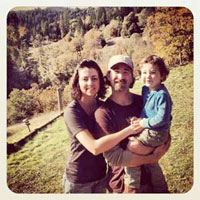
Even farther north in the Russian River Valley, the Davis Family Vineyards is making an enchanting, earthy Syrah from its Soul Patch Vineyard. The vines are organically farmed by Guy and Judy Davis and their son, Cole. This inky magenta-black juice has muscle, and shows aromatics of black pepper, forest floor, bay leaves, prunes, and herbs. The palate is relatively juicy, with notes of sweet black fruit, especially for a wine with such gripping tannins. There’s a smoothness here with an underpinning firmness. It’s a bit tight at first sniff, and will benefit from a decant, but opens up onto deep, herbaceous black fruit. The Syrah is co-fermented with 3 percent Viognier, in Cote-Rotie style. It’s mostly aged in French barrels, but some is aged in Puncheons, which are about double the size. This allows for more micro-oxygenation and less exposure to the wood surface area. The result is a very balanced approach to oak in the wine. This one will age well, so drink one and cellar one.
California is at a bit of a crossroads with Syrah. Long touted as the "next big thing," the varietal still hasn't created quite the consumer buzz that it has the potential to do. But it's still a relative newcomer to the state. As winemakers continue to zero in on the perfect terroir, a distinctively California style is beginning to emerge: savory and deep with just a touch of that hedonistic lushness that California is known for. IT might not ever compete with Cabernet for market share, but wherever someone's grilling up lamb chops or a peppery steak, Syrah will be there. And it'll be white hot! |