
Est. 2001. Importer & Distributor of Fine Wine, Craft Spirits, and Ginjo Sake
| VITICULTURE PRACTICES What is the purpose of 'natural viticulture'? Why does one choose this route for their vineyards? And then narrow it down further to a farming practice which falls under the main categories of 'Sustainable,' 'Organic' or 'Biodynamic.' There are various ways to look at it, but ultimately it's a respect for the environment and, an end result of quality fruit. 'Naturally-Farmed' wine is all about the relationship between the grapes and their environment. As a steward of land, who respects this balance and interaction of organisms with their environment, one is making a responsible choice to leave the earth in better condition than they found it, by preventing erosion and preserving the land for future generations. Just imagine the long-term effect of agrichemicals on the soil, stripping out the beneficial bugs, minerals and nutrients, to then have the grapes absorb whatever is left. According to Spanish proverb 'Good wine ruins the purse; bad wine ruins the stomach'. Good wine varies in quality from plonk to wine so heavenly it will bring a tear to your eye. So why such a range when this gift of nature starts with one ingredient, a grape. Simply put, this raw material is born and raised in the vineyard. Start with a vine that is grown with no use of chemicals, herbicides or pesticides in the vineyard, try to limit the use of copper sulfate and sulfur and you end up with healthy, naturally-grown grapes. If this quality is preserved throughout the winemaking process, you will end up with a wine that has a long length of finish, thus revealing the integrity of fruit. (Undoubtedly, the winemaker has to start with an understanding of the basics of science behind this transformation of grapes to wine.) The road to terroir is paved with good intentions, but the term 'natural' has become a lightening rod for controversy, misuse and self-righteous dogma. In order to create a standard, many producers have chosen to go the path of certification. We feel that many producers and associations are doing good, honest work and should be listed in this context. Listed below are the three main categories of Natural Farming (Biodynamic, Organic, Sustainable), the wineries in Cream's portfolio that adhere to these practices and the governing bodies for both US and International. |
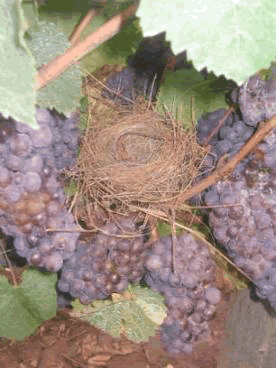 A bird's nest found in Ransom's Cattrall vineyard farmed organically since 1974. |
Biodynamic Viticulture Practices & Certification | |
|
Biodynamic viticulture raises organic agriculture to a higher place as a system of managing a farm’s natural resources including certified organic growing practices to produce the highest quality fruit possible. Its goal is to create an individually unique ecosystem which is as self-sufficient as possible with respect to the cycle of substances it requires. It’s your own ‘incestuous little world’ with its own individuality. BioD uses a philosophical model articulated in eight lectures developed as an alternative to chemical agriculture by Austrian scientist and philosopher, Rudolf Steiner, in 1924. Part of a much greater spiritual science, biodynamic farmers go so far as to plan for the growth of the leaves, roots, flowers or fruit, according to the cosmic and terrestrial forces that influence life energy such as the positions of the moon and stars, the time of year, and even the time of day that grapes are picked. This form of viticulture has been adopted by increasing numbers of high quality producers and vineyards around the world. You can search for these wines in our advanced search. Check out the full list of certified biodynamic wines available. |
Wiki on Biodynamic Wine Demeter USA Wiki on Demeter Certification Biodynamics.com National Sustainable Agriculture |
AUSTRIA |
MEXICO USA |
Organic Viticulture Practices & Certification | |
| Organic viticulture, as compared to conventional viticulture, is defined in the 1990 U.S. Farm Bill as 'a system of grape growing which does not use industrially-synthesized compounds on the soil or the vines in order to increase fertility or to combat pest problems.' Organic viticulture procedures carried out in the cellar include limited handling and processing, and avoidance of chemical additives (except for the occasional use of very low levels of sulfur dioxide as a preservative). The consumer awareness and demand for organic wine is increasing every year and Cream has an extensive selection of certified organic wines in its portfolio. You can search for these wines in our advanced search. Check out the full list of certified organic wines available. | Wiki on Organic Wine The Organic Wine Journal Organic Consumer Assoc. Salmon Safe |
Sustainable Viticulture & Certification | |
| Sustainable wines should be included in the 'natural farming' section. Sustainable is not pretending to be organic or biodynamic, but it still has a base in nature and driven by a natural philosophy (just like organic and biodynamic). Sustainable agriculture is based in the farmer doing their part to preserve the land and prevent erosion for years to come- leaving it in better condition then when they acquired the land. Stewardship of both natural and human resources is of prime importance. There are governing bodies and organizations that monitor their practices and a category to be taken seriously in the farming community. Farmers use renewable energy sources (naturally derived from earth) and protects the integrity of natural systems. Just because sustainable farmers are not using a solution of sharpshooter wing ashes and water to spread over their vineyard, does not mean they are not practicing natural techniques. They do have a natural philosophy or outlook on how they manage their vineyards. Let us know your thoughts on whether you think Sustainable is or should be considered natural farming/agriculture. Send us an email at service@creamwine.com , tweet us @creamwine, or post on our Facebook page. | UC Davis Sustainable Table ISO 14000 L.I.V.E. |


Quick Finds |
|
Top 10 current offerings |